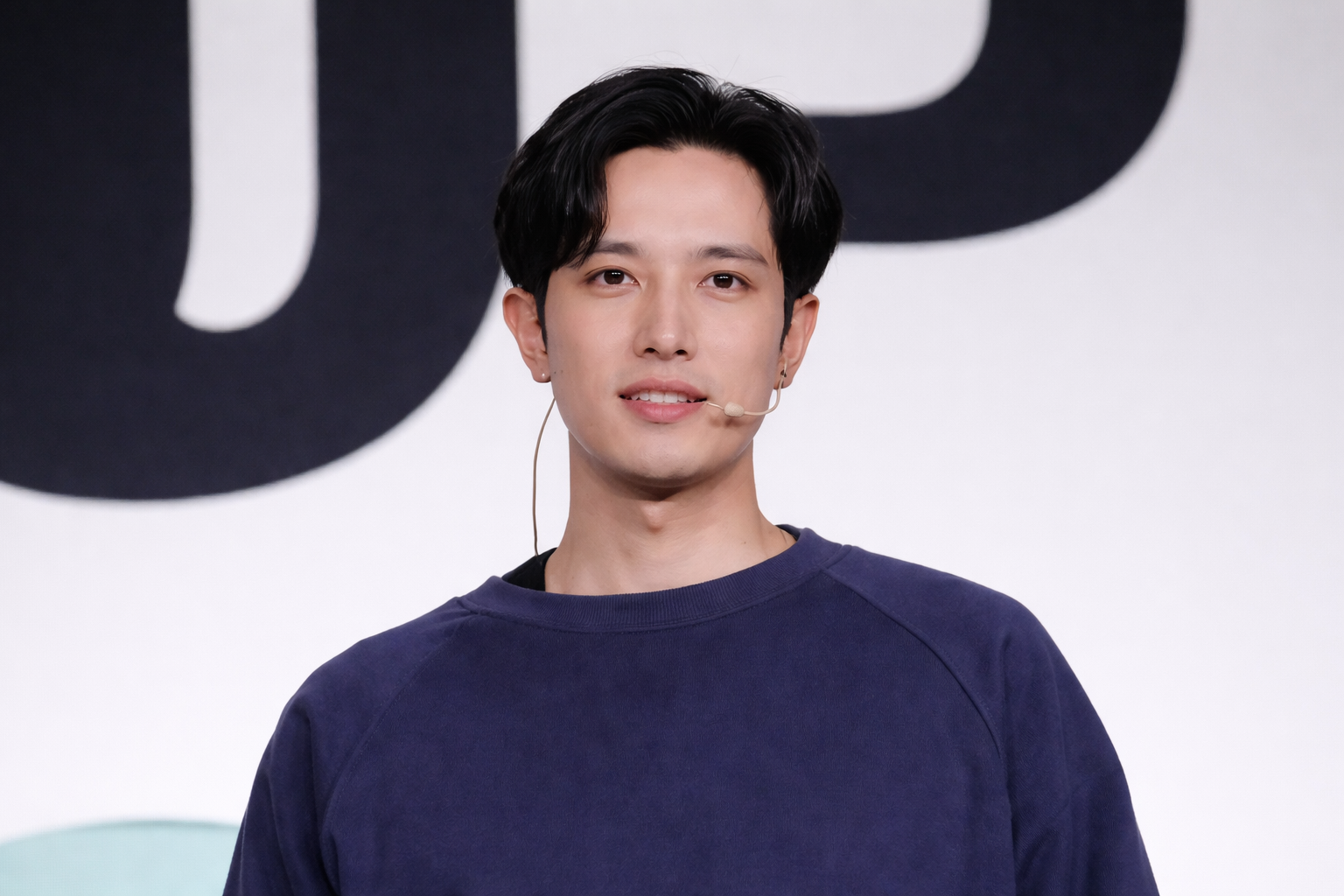
Industrial robots have been useful for a long time, but they have never been known for being flexible. They are great at repeating the same motion again and again, yet they often struggle the moment a product changes, a workflow shifts, or a factory needs something new. That gap between power and adaptability is exactly where Xavier (Tianhao) Chi saw an opportunity.
With Mbodi AI, Chi is working on a much bigger idea than simply making robots faster. He is helping build a system that makes industrial robots easier to teach, easier to adapt, and much more practical for real manufacturing environments. Instead of relying on long programming cycles and specialist-heavy setup, Mbodi AI is built around a simpler vision. Robots should learn more like people do, through language, demonstration, and repeated interaction with the world around them.
That idea may sound ambitious, but it is also the reason Mbodi AI has started to attract serious attention. The company has earned Y Combinator backing, public recognition from ABB Robotics, and growing visibility in conversations around embodied AI and the future of industrial automation. For Xavier (Tianhao) Chi, that progress reflects more than startup momentum. It shows that the market is ready for a different way of thinking about robot learning.
Who Xavier (Tianhao) Chi Is and What Led Him to Mbodi AI
Xavier (Tianhao) Chi did not arrive in robotics from a casual interest in automation. His background is rooted in deep engineering work, including time at Google, where he was publicly described as a former tech lead for Google Public DNS, the well-known 8.8.8.8 service. That kind of experience matters because it points to the kind of systems thinking he brings into startup building. Running critical infrastructure teaches you how important reliability, scale, and real-world performance really are.
That mindset shows up clearly in Mbodi AI. The company is not selling a flashy robotics demo that looks great for a conference clip and then falls apart in production. Its public message has been consistent from the start. Mbodi AI is focused on helping robots learn new skills through natural language and quick demonstrations, then execute those skills reliably in production. That emphasis on reliability is important because factories do not care much about novelty on its own. They care about whether a system can keep working once it is deployed on the floor.
Chi’s move from major internet infrastructure to embodied AI also says something about where the next wave of technical founders is heading. Many of the most interesting AI companies are no longer focused only on digital tasks. They are moving into the physical world, where intelligence has to show up in motion, perception, timing, and adaptation. Mbodi AI sits right in the middle of that shift.
Why Industrial Robots Still Struggle to Adapt
To understand why Mbodi AI matters, it helps to look at the pain point it is trying to solve. Traditional industrial robots are powerful, but they are usually rigid. They perform best in fixed environments where tasks stay the same for long periods. The problem is that modern manufacturing rarely looks that simple anymore.
Product lines change. Customer expectations shift. Companies deal with new SKUs, shorter production cycles, and constant pressure to move faster without adding more downtime. In that kind of environment, a robot that needs a long reprogramming process every time something changes becomes a bottleneck instead of a solution.
That is one of the biggest reasons many automation opportunities still go untouched. The hardware may already exist, but the software, training, and integration burden can make automation too slow or too expensive to justify. Mbodi AI is built around the idea that this is not just a programming issue. It is an adaptability issue.
If robots are going to be more useful in real factories, they need to respond to change much more naturally. They need to take instructions faster, adapt to new conditions, and transfer learning across tasks without starting from scratch every time.
How Mbodi AI Makes Robots Learn More Like Humans
Mbodi AI’s pitch is simple to understand, which is one reason it stands out. Instead of requiring long coding workflows and heavy engineering effort, the platform is designed to let people teach robots through natural language and demonstration. In other words, the robot does not need to be treated like a machine that only understands technical scripts. It can be guided in a way that feels closer to human instruction.
That shift matters because it lowers the friction that usually comes with industrial automation. A team does not need to stop operations for extended reprogramming. It does not need to depend entirely on specialists for every change. And it does not have to accept that adaptation is always slow.
Mbodi AI describes its platform as a cloud-to-edge system that can understand instructions, interpret the environment, make a plan, and turn that plan into precise robot actions in real time. The larger goal is not just to help one machine perform one task. It is to build a framework where robot skills can be taught quickly, reused across systems, and adapted when conditions change.
That is where the human-like learning angle becomes especially interesting. People do not relearn every task from zero each time something changes slightly. They adjust based on context. Mbodi AI is trying to bring more of that flexibility into industrial robotics.
What Makes Mbodi AI Different From Traditional Robotics Software
A lot of robotics companies talk about intelligence, but the real difference usually comes down to usability. Mbodi AI is not just saying that robots should be smart. It is saying they should be teachable.
That is a much stronger commercial position because teachability speaks directly to the day-to-day problems manufacturers face. They do not simply want advanced robotics software. They want fewer delays, less downtime, less dependency on outside experts, and a faster path from instruction to execution.
Mbodi AI’s public positioning leans heavily into that value. It talks about no week-long reprogramming, no specialist bottlenecks, and no need to interrupt production every time a task changes. It also frames learning as something that can scale across fleets, which is important because the value of robot training increases when knowledge can transfer across multiple machines and facilities.
That combination of natural language robotics, adaptive automation, real-time control, and fleet-wide learning gives Mbodi AI a more modern story than traditional robotics software providers. Instead of treating every automation challenge as a custom engineering project, it aims to make robot training feel more like software deployment.
Why This Matters for Modern Manufacturing
Mbodi AI is entering the market at a time when manufacturers need flexibility more than ever. Many factories are dealing with labor shortages, tighter margins, and higher expectations around speed and efficiency. At the same time, a huge share of industrial work still remains difficult to automate because it involves variation.
That is where the company’s messaging around high-mix, low-volume environments becomes especially important. In these settings, the challenge is not just getting a robot to do one thing. It is getting a robot to switch between tasks, adjust to changes, and keep operating without long setup cycles.
For a manufacturer, that can mean the difference between automation that looks good in theory and automation that actually works in practice. A robot that learns in minutes instead of months is not just a technical improvement. It changes the economics of adoption.
This is also why embodied AI has started to attract so much attention. The conversation is moving beyond whether AI can generate text or images. More people now want to know whether AI can make physical systems more useful in the real world. Mbodi AI is part of that movement, but with a very specific and commercially relevant focus on industrial robotics.
The Early Signs That Mbodi AI Is Getting Real Attention
Mbodi AI is still an early-stage company, but the public signals around it are strong enough to matter. One of the clearest validation points is its place in Y Combinator’s Spring 2025 batch. For an industrial robotics startup, that kind of backing helps because it brings credibility, visibility, and access to a wider network of investors, operators, and partners.
Another important milestone came from ABB Robotics. In late 2024, Mbodi AI was named one of the winners of ABB Robotics’ AI Startup Challenge. The company was selected from more than 100 global applicants, and ABB described Mbodi’s platform as a major advancement in making robotic automation more accessible, especially for businesses that need flexible solutions in high-mix, low-volume production environments.
That recognition matters because ABB is not just any industrial name. It is one of the best-known robotics companies in the world. When a startup wins attention from a player like that, it suggests the underlying problem is real and the solution is commercially relevant.
Mbodi AI has also publicly discussed a commercialization path with ABB, which points to something more valuable than simple press coverage. In industrial automation, partnerships and deployments matter more than hype. The strongest early signal for any robotics startup is not that people find the idea interesting. It is that serious industry players think the technology can solve real production problems.
How Xavier (Tianhao) Chi Is Shaping Mbodi AI’s Bigger Vision
What makes Xavier (Tianhao) Chi interesting as a founder is not just that he has a strong technical background. It is that he appears to be aiming at a structural problem in industrial automation rather than a narrow feature gap.
Mbodi AI is not trying to become just another robotics software layer. It is pushing toward a larger change in how robots are taught, deployed, and scaled. The company’s vision suggests a future where robots are easier to instruct, faster to adapt, and much more accessible to businesses that have traditionally found automation too rigid or too expensive to update.
That is a meaningful shift. For years, one of the biggest limitations in robotics has been the gap between what robots can technically do and what companies can realistically deploy. Mbodi AI is trying to close that gap by making robot learning more natural.
If that approach keeps working, the long-term impact could be bigger than one startup story. It could help reshape how industrial automation is adopted across manufacturing. Instead of seeing robots as fixed-function tools that need constant specialist intervention, more businesses may start seeing them as adaptable systems that can be taught and improved over time.
That is the larger idea behind Mbodi AI, and it is also what gives Xavier (Tianhao) Chi’s founder story real weight. He is not only building around AI. He is building around the possibility that industrial robots can become far more practical when they learn in a way that feels closer to how humans learn on the job.