For all the talk around AI in finance, a surprising amount of work still gets stuck in the least glamorous part of the process: cleaning data.
That is the kind of problem outsiders rarely notice. On the surface, investing looks like a world of sharp models, fast decisions, and sophisticated research. Behind the scenes, though, even strong teams can lose hours dealing with messy source documents, missing fields, inconsistent formats, and manual review steps that slow everything down.
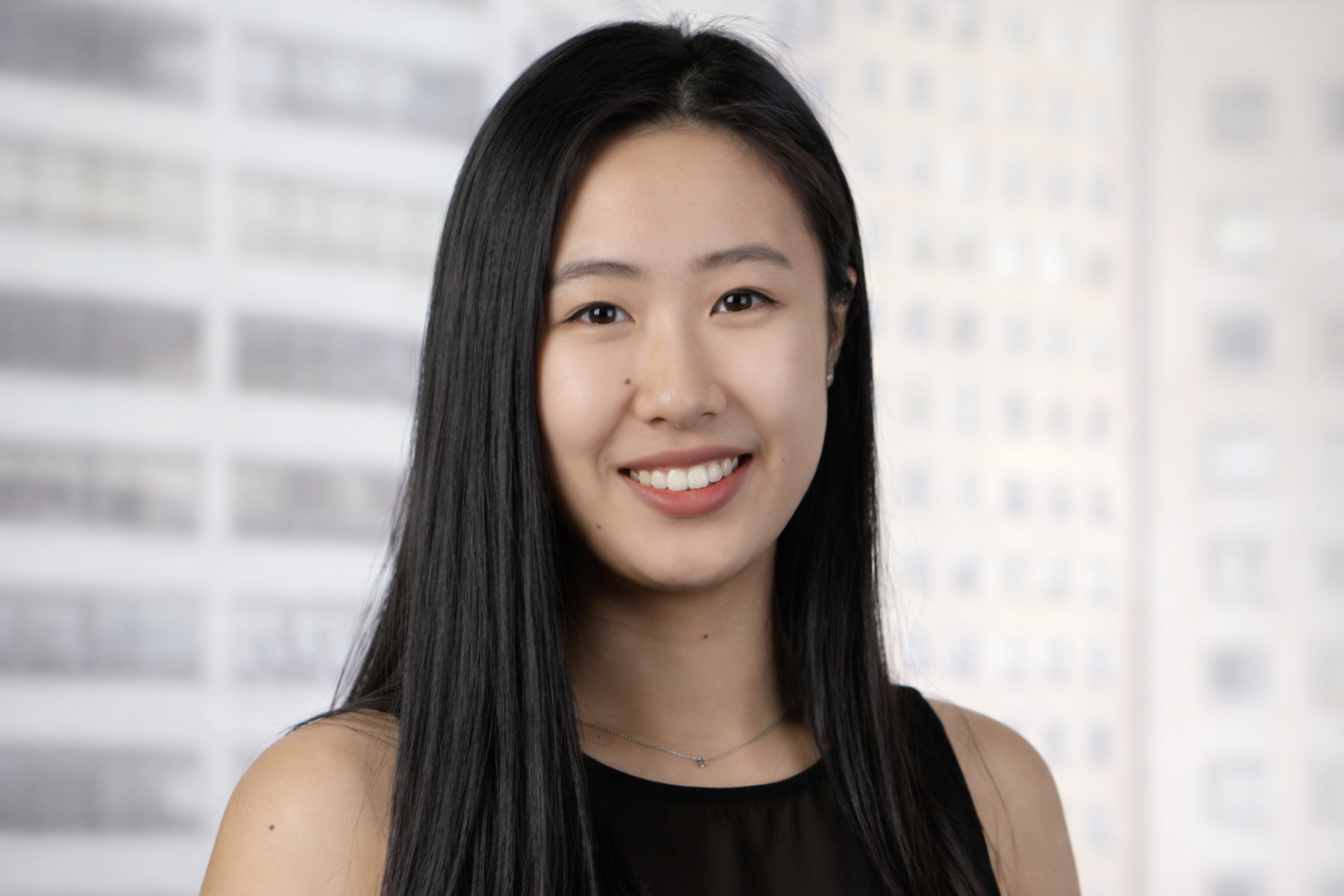
Nicole Lu built sieve around that friction.
As the co-founder and CEO of sieve, she is tackling a problem that sits right in the middle of modern financial workflows. The company focuses on data cleaning for hedge funds and investment firms, helping teams turn difficult raw inputs into clean, validated data through an API or Excel-based workflow. It is a practical idea, but that is exactly why it stands out. Instead of building another flashy finance AI product that sounds impressive in a pitch deck, sieve is aimed at the kind of operational bottleneck that quietly affects speed, accuracy, and analyst time every single day.
The finance data problem most people never think about
A lot of financial work depends on data that is technically available but not immediately usable.
That sounds simple until you look closer. Important information can live inside SEC filings, reports, tables, investor materials, PDFs, spreadsheets, or web pages that were never designed to fit neatly into a clean pipeline. Pulling that information out is only one part of the job. Checking whether it is complete, consistent, and trustworthy is where the real drag begins.
Inside investment firms, that burden often falls on highly skilled people who should be spending their time on more valuable work. Analysts want to analyze. Researchers want to test ideas. Data scientists want to improve models and systems. Instead, many teams still end up dealing with review queues, broken extraction logic, edge cases, and human checks that pile up in the background.
Nicole Lu saw that this was not some minor inconvenience. It was one of finance’s messiest operational problems, and it had been treated like a normal cost of doing business for far too long.
Why Nicole Lu was well positioned to build sieve
Some founders discover a problem from the outside. Nicole Lu came to it with direct exposure to the kind of environment where data quality matters.
Her public background helps explain why sieve feels so grounded in real workflow pain rather than startup theory. She studied computer science at MIT and later worked at Citadel across equity quant research, global trading, and data science. She also worked at McKinsey and developed cancer detection algorithms at the Broad Institute.
That mix matters.
It suggests both technical depth and experience inside high-performance environments where accuracy is not optional. In finance, small data issues can create large downstream problems. A missing field, a formatting inconsistency, or a weak review process can waste time at best and distort decision-making at worst. Founders who understand that reality tend to build differently. They focus less on vague promises and more on reliability, integration, and trust.
That mindset shows up clearly in how sieve is positioned.
The insight behind sieve was simple but powerful
The real issue was not that finance teams lacked access to information. The issue was that too much of that information arrived in a form that was expensive to clean, hard to validate, and awkward to fit into existing systems.
That is where sieve found its opening.
Instead of asking firms to completely change how they work, the company focused on fitting into workflows that already existed. If a team already had data pipelines, analysts, and review steps in place, the better solution was not to blow everything up. The better solution was to replace the most painful manual step with something faster and more dependable.
That is a big reason the company’s pitch lands so well. It is not built around abstract AI excitement. It is built around a direct operational question: what happens when the human review part of a finance data pipeline no longer has to be handled through scattered internal processes and repeated manual effort?
Nicole Lu and her team turned that question into a product.
What sieve actually built for hedge funds and investment firms
At its core, sieve helps hedge funds and investment firms replace manual data review in their pipelines with a simpler workflow.
The company offers an API that plugs into an existing system. Instead of sending difficult cases into a slow internal review loop, a client can send the relevant information to sieve and get back clean, high-quality, validated data. The company also supports access through tools like Excel, which makes the product easier to adopt inside firms that still rely heavily on spreadsheet-based workflows.
That practical design choice matters more than it may seem.
A lot of enterprise products fail because they demand too much behavior change. Finance teams are not looking for novelty for its own sake. They want solutions that reduce friction without forcing them to rebuild everything around a new tool. By meeting users where they already work, sieve makes adoption feel more realistic.
The other important layer is how the work gets done. sieve uses AI agents built for financial data collection, but it does not stop there. It pairs automation with expert-in-the-loop review. That combination is a major part of the company’s value proposition.
In other words, sieve is not presenting AI as magic. It is using AI where scale and speed make sense, then adding expert review where accuracy still matters most.
Why Nicole Lu did not build an AI only story
This may be one of the smartest parts of the company’s positioning.
Finance is full of areas where being mostly right is not good enough. Teams may tolerate a rough draft from a general AI tool in some settings, but investment workflows often demand something far more dependable. The cost of bad data can ripple across research, reporting, forecasting, and execution.
Nicole Lu appears to have understood that early.
That is why sieve does not lean on the kind of messaging that says AI alone will solve everything. Its public story is much more disciplined. The company talks about AI plus human review. It talks about validated data. It talks about replacing manual review while still reaching the level of quality hedge funds need.
That approach feels especially credible in a market crowded with companies trying to sound futuristic. Reliability is often more persuasive than hype, especially when the buyer is a finance team that cares about precision.
This also helps explain why sieve feels less like a generic automation startup and more like finance infrastructure. It is solving a specific pain point with a workflow designed around trust.
Giving high value teams their time back
One of the clearest ideas in sieve’s public messaging is that smart people should be doing more differentiated work.
That phrase captures something important. The real cost of messy data is not just labor. It is opportunity cost.
When talented analysts and engineers spend too much time cleaning, checking, and fixing incoming data, the firm loses time it could have spent on original thinking, better modeling, deeper research, and faster reaction to opportunities. The hidden drag is not only in the task itself. It is in everything the team is not doing while that task keeps eating up attention.
Nicole Lu built sieve around removing that drag.
That makes the company’s value easier to understand. It is not only about extraction. It is about freeing up expensive, highly trained people to focus on work that actually differentiates the firm.
That is a strong founder angle because it turns a back-office problem into a strategic one. Clean data is not just a nice operational improvement. It supports better use of talent across the organization.
Early traction made the story stronger
A good startup story becomes more convincing when the results support the pitch.
In sieve’s public YC launch materials, the company shared early signals that its approach was working. It said the product could match data that had been hand-collected internally, reduce weeks of full-time review work into a more passive background task, and come in significantly cheaper than existing options, including outsourcing.
Those details matter because they connect directly to the three outcomes buyers care about most: accuracy, scale, and cost.
That also fits neatly with the company’s Y Combinator story. Being part of YC gave sieve a strong signal of credibility, but the stronger point is why the company earned that attention in the first place. It was going after a real, expensive, and clearly defined problem with a product that fit how finance teams already operate.
Nicole Lu did not need to manufacture a market narrative around sieve. The pain point was already there. The opportunity came from solving it in a more usable way.
How sieve stands out in a crowded AI market
There is no shortage of AI startups talking about automation, agents, and workflow transformation. What makes sieve more interesting is its focus.
It is not trying to serve every industry. It is not presenting itself as a broad platform for all document extraction everywhere. Its story is much tighter than that.
sieve is focused on finance, and more specifically on the data cleaning and extraction pain felt by hedge funds and investment firms. That narrow focus gives the company a clearer identity. It also gives Nicole Lu a stronger founder narrative because the business looks shaped by lived experience rather than trend chasing.
That is often where the best startup stories come from. Not from inventing a problem people barely recognize, but from taking a frustrating, accepted part of an industry and finally treating it like something worth fixing properly.
Nicole Lu built sieve at that exact intersection.
What Nicole Lu and sieve represent in the bigger picture
The rise of companies like sieve says something important about where AI is actually creating value.
Some of the most useful AI businesses are not the ones making the loudest promises. They are the ones removing expensive friction from workflows that already matter. They combine automation with domain understanding. They fit into existing systems instead of demanding total reinvention. And they win trust by being dependable where it counts.
That is what makes Nicole Lu’s story with sieve worth paying attention to.
She built the company around a messy but meaningful problem in finance, shaped the product around real adoption, and positioned it in a way that feels practical in a market full of noise. For hedge funds and investment firms that depend on clean data but do not want to keep burning top talent on manual review, that is not a minor improvement. It is a meaningful shift in how the work gets done.