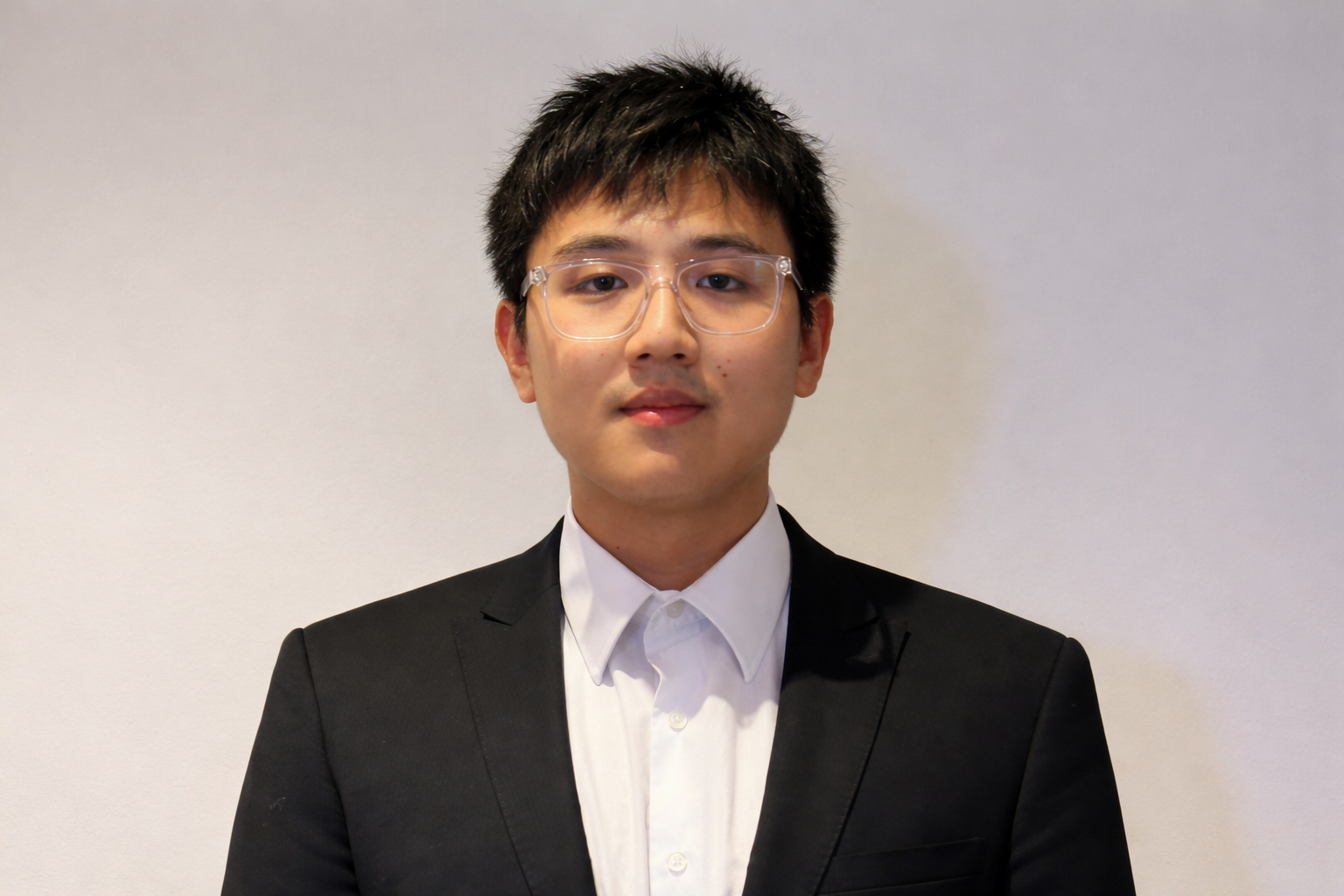
Manufacturing has never had a shortage of hard problems. Quality checks slow lines down. Manual inspections miss things. Traditional computer vision tools often take too long to set up, cost too much to maintain, and can feel too rigid for fast-moving production environments. That is the gap Allus AI is trying to close, and Zhisen An is part of the team helping push that effort forward. Allus AI, a Y Combinator Fall 2025 company, says it is building next-generation vision foundation models for manufacturing so factories can see, understand, and improve production in real time.
What makes that story interesting is not just the usual startup headline about AI. It is the fact that Allus AI is aiming at a part of industry where flashy language means very little unless the product works on real production lines. In manufacturing, results matter more than hype. If a system cannot improve inspection, monitor processes, and fit into actual factory workflows, it does not matter how impressive the underlying model sounds. That is where the company’s pitch starts to stand out. Allus says its platform is built to define manufacturing vision problems in natural language, generate production-ready AI solutions, and deploy them to cameras, industrial PCs, or robots for real-time inspection and monitoring.
Who Is Zhisen An and What Is Allus AI
Zhisen An is listed by Y Combinator as a co-founder of Allus AI, with an MS in computer science from Georgia Tech. He is part of a founding team that also includes Chris Kai Cui and Shijie Wang, both of whom are tied to Georgia Tech as well. That background matters because Allus AI is not presenting itself as a generic software startup looking for a market. It looks more like a technically serious team going after a very specific industrial pain point.
Allus AI describes itself as a company building a vision foundation model for manufacturing. On its site, the company positions the product as a universal AI solution for manufacturing across industries, focused on quality inspection and process monitoring. On the Y Combinator company page, Allus says it wants to bring real intelligence to manufacturing by helping factories see, understand, and improve production in real time.
That positioning matters because it immediately tells you where Zhisen An and the team are trying to play. They are not chasing broad AI branding. They are going after one of the most expensive and frustrating problems in industrial operations: making visual intelligence practical at scale.
The Manufacturing Problem Allus AI Set Out to Solve
A lot of factories still rely on manual inspection or older machine vision systems that were never built to adapt quickly. The problem is not that manufacturers do not care about automation. The problem is that many vision systems are narrow, expensive, and time-consuming to implement. Allus says traditional manufacturing vision systems are often slow, complex, and costly, while many factories still depend on manual inspection for defect detection and process compliance.
That is a real business problem, not just a technical one. Every delay in inspection can affect throughput. Every missed defect can become a quality issue, a returns issue, or even a brand issue. Every process compliance gap can create downstream operational costs. So when a company like Allus AI talks about shortening implementation time and improving inspection performance, it is speaking directly to the pressure manufacturers already feel every day.
This is where Zhisen An’s work becomes part of a bigger success story. Helping build a company in this category means solving for reliability, speed, usability, and adaptability all at once. It is not enough to build a strong model. The model has to fit the reality of the factory floor.
Why Vision Foundation Models Matter in Manufacturing
The phrase vision foundation model can sound technical, but the practical idea is simple. Instead of building a different computer vision setup for every single use case, the company is trying to build a more general model that already understands industrial environments at a broad level. From there, it can be adapted to specific problems much faster than older systems.
According to Y Combinator, Allus AI’s model is a 1 billion parameter vision foundation model trained on more than 1.5 billion industrial, robotics, and manufacturing data pairs collected over five years. The company says that large training base gives the model familiarity with machines, people, and processes across factory settings. It also says the model reaches more than 99.95 percent accuracy in defect detection and more than 99.2 percent in process monitoring.
That is the core idea behind why this matters. In older setups, every new line, every new product type, and every new quality requirement can become its own lengthy integration project. A foundation model approach tries to reduce that friction. It gives manufacturers a starting point that is already trained on the patterns and complexity of industrial environments. That means less rebuilding from scratch and more time getting usable systems into production.
How Zhisen An Helped Shape Allus AI’s Practical Direction
The strongest part of the Allus AI story is that it is framed around practical use, not abstract research. The company does not talk about vision AI as a future possibility. It talks about getting industrial-grade vision solutions delivered quickly and deployed into real workflows. On its site, Allus says customers can define manufacturing vision problems in natural language, generate production-ready AI solutions, and deliver industrial-grade vision solutions in 30 minutes.
That kind of positioning says a lot about the team behind the company. It suggests that founders like Zhisen An are not only thinking about model quality, but also about the experience of implementation. That is a major difference. Plenty of AI companies can explain what their models do. Fewer can explain how a factory manager, operations lead, or manufacturing engineer actually gets from a problem to a working solution without months of friction.
This is where success starts to look more meaningful. Zhisen An’s role in helping Allus AI matters because the company is trying to bridge two worlds that do not always connect easily: advanced AI research and everyday industrial operations. That bridge is where real value gets built.
From Georgia Tech Roots to Y Combinator Backing
The founder story also gives the company more depth. Y Combinator lists Zhisen An as a co-founder with a Georgia Tech background, while the company’s CREATE-X profile ties the team to Georgia Tech and frames their mission around automating quality inspection without human intervention. Y Combinator also lists Allus AI as part of its Fall 2025 batch.
That path matters because it shows the company did not appear out of nowhere with a vague AI pitch. There is a visible line from technical education and startup building to accelerator backing and real market positioning. Georgia Tech gave the story technical credibility. Y Combinator added startup validation and visibility. Together, those pieces helped Allus AI look like more than an idea on paper.
For Zhisen An, that makes the success story more compelling. It is not just about being attached to a startup in a hot category. It is about helping move a difficult industrial AI concept from a university-linked founding environment into one of the best-known startup ecosystems in the world.
Turning a Complex AI Idea Into a Factory-Ready Product
A lot of AI companies struggle at this point. They can explain the science, but not the workflow. Allus AI is trying to solve that by making the product feel operational rather than experimental. The company says it supports deployment to cameras, industrial PCs, and robots, while also offering real-time analytics and AI-driven insights to optimize quality and efficiency.
That matters because manufacturers do not buy models. They buy outcomes. They want fewer defects, better process monitoring, stronger quality assurance, and less delay between identifying a problem and fixing it. When Allus AI talks about production deployment, analytics, and rapid solution delivery, it is translating sophisticated AI into something much closer to operational language.
That is one reason Zhisen An and Allus AI stand out as a founder-company pairing worth covering. The company’s message is not only about intelligence. It is about usability. And in manufacturing, usable often beats impressive.
Early Traction Gave the Story More Weight
The most convincing startup stories are the ones that can point to real-world traction early. Y Combinator says that in a three-month stretch, Allus AI deployed its system on production lines run by five global Fortune 500 manufacturers and, in some cases, improved defect detection accuracy by more than 100 times. The company also says it is working with manufacturers across sectors including electronics, automotive, food and beverage, FMCG, and high-performance materials.
That does not sound like a team stuck in prototype mode. It sounds like a company moving quickly into real environments where performance actually matters. For a founder story, that changes everything. It turns the article from a profile about promise into a profile about momentum.
And that is where the success angle lands best. Zhisen An is not simply part of a startup building AI for industry. He is part of a founding team trying to prove that vision foundation models can work where the bar is high, the margin for error is low, and adoption only happens when the product earns trust.
Why This Story Fits a Bigger Shift in Industrial AI
The bigger reason this story matters is because manufacturing is becoming a serious proving ground for applied AI. For years, industrial AI has been discussed as a huge opportunity, but implementation has often lagged behind the vision. Companies that can reduce setup time, improve flexibility, and fit into messy real-world production environments have a much better chance of breaking through.
Allus AI’s pitch fits that shift well. It combines foundation model language with very specific factory use cases like defect detection, process monitoring, quality assurance, anomaly detection, and production analytics. That combination is important because it moves the conversation away from AI as spectacle and toward AI as infrastructure.
That is why the story of Zhisen An and Allus AI feels worth following. It sits at the intersection of manufacturing, computer vision, industrial automation, and AI-native software. More importantly, it points to a version of startup success that feels grounded. Not just funding. Not just branding. Not just technical ambition. Real traction tied to a real industrial problem.