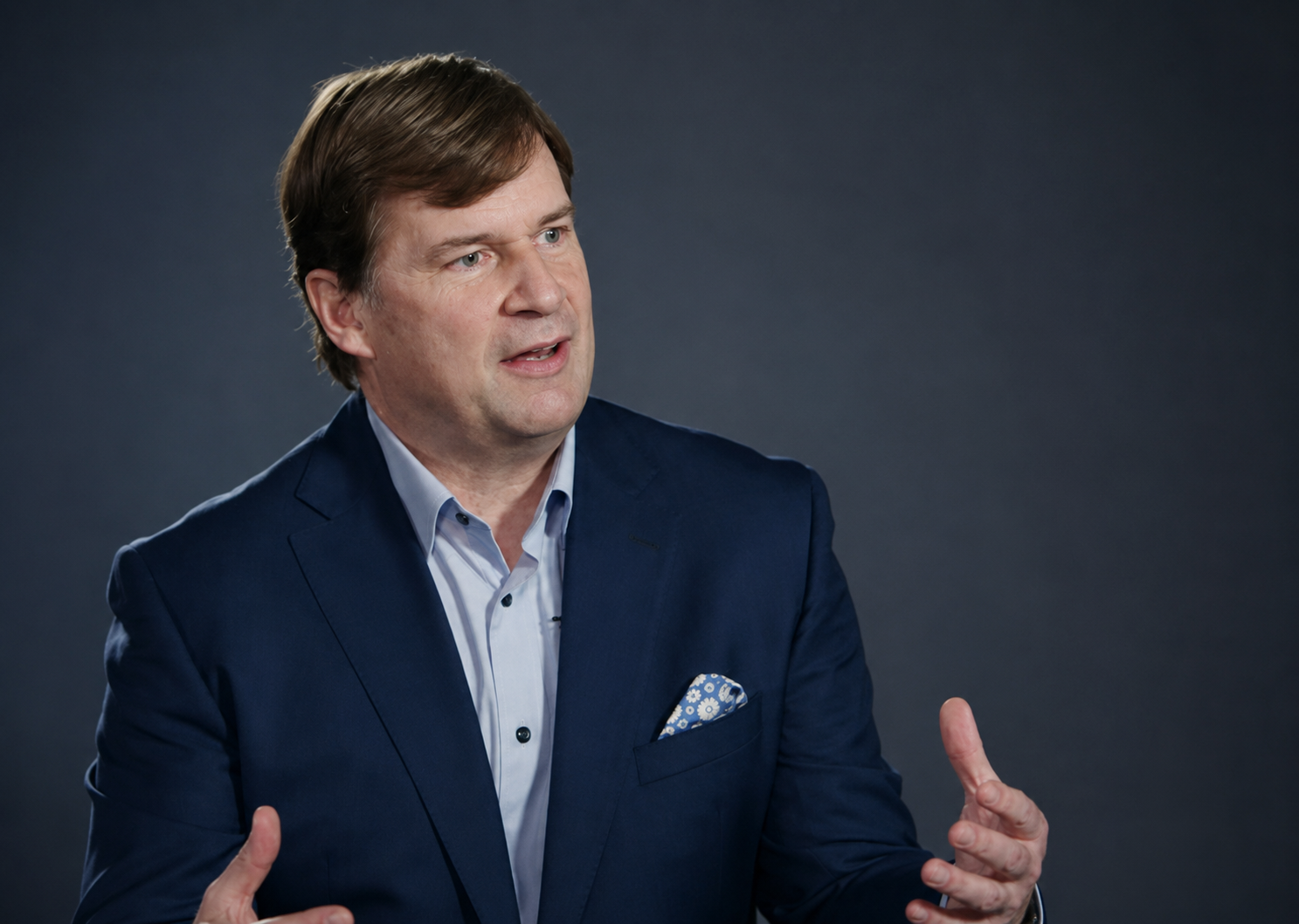
Sven Myhre is building in one of the most crowded spaces in tech right now, but Ara gives him a clear angle that feels more practical than flashy. While a lot of AI startups are focused on chat interfaces, wrappers, or one-off tools, Ara is centered on something bigger: personal AI cloud computing that gives users a place where AI agents can actually run, stay active, and get useful work done.
That idea matters because the way people use AI is changing fast. It is no longer just about asking a model a question and getting a response. More users want AI agents that can organize files, send emails, manage tasks, connect tools, remember context, and keep working in the background. For that to happen, those agents need a reliable compute environment, not just a prompt box. That is the gap Ara is trying to fill, and it is a big reason why Sven Myhre and his team earned Y Combinator backing.
Ara’s rise is not only a startup milestone story. It is also a sign of where AI infrastructure, personal automation, and always-on computing may be heading next. Sven Myhre’s work with Ara shows what happens when a technical vision meets the right timing, the right market pressure, and a product story that speaks to both builders and everyday users.
Who Sven Myhre Is and What Ara Is Building
Sven Myhre is best known as one of the co-founders behind Ara, a startup working on personal AI cloud computing. The company’s core idea is simple to describe, even if the underlying technology is much more ambitious. Ara wants to give users a personal AI computer in the cloud, a place where AI agents can run continuously, work across tasks, and operate in isolated environments built for action rather than just conversation.
That framing helps Ara stand out. Many AI products still depend on the user being present for every step. A prompt goes in, a result comes back, and the interaction ends there. Ara is pushing toward something more persistent. Instead of one-off exchanges, it is built around always-on agents, instant cloud runtimes, and a computing layer that makes AI feel more useful in real life.
This is where Sven Myhre’s role becomes interesting. He is not just attached to a trendy AI brand. He is part of a company trying to rethink how AI should operate for individuals who want more than text generation. The focus is on task automation, agent computing environments, cloud execution, and giving users a system that feels closer to a personal operating layer for AI.
The Technical Vision Behind Ara
The technical vision behind Ara starts with a simple observation. AI is getting smarter, but intelligence alone is not enough. If an AI agent cannot stay active, hold context, use tools, and act across multiple workflows, it still feels limited. It may be impressive in a demo, but it does not always become part of daily work.
Ara is built around the belief that personal AI needs a reliable runtime platform. That means giving agents their own compute environment, access to tools, memory, and channels, and the ability to operate in ways that feel stable rather than fragile. This is where terms like cloud runtimes, runtime isolation, and AI orchestration become important. Ara is not just presenting another assistant. It is building the infrastructure layer that allows autonomous agents to do more than answer questions.
That matters in a world where users increasingly want AI for real-world use cases. A personal AI system should be able to manage day-to-day tasks, support continuous AI workflows, and move from suggestion to execution. The vision behind Ara is that AI should not feel like a tool you constantly restart. It should feel like a system that is already there, ready to work.
Sven Myhre’s technical vision also lines up with a larger shift happening across the AI startup space. More founders are trying to move beyond chat and into action-based assistance. But to make that shift work, they need a platform that can support memory, tool use, workflow automation, and operational reliability. Ara’s product direction places it directly inside that movement.
Why Ara Entered the Market at the Right Time
Timing plays a huge role in every startup story, and Ara seems to have entered the market at exactly the right moment. AI agents are becoming one of the biggest themes in software, but there is still a real gap between what users want and what most products actually deliver. People want automation that lasts, adapts, and handles intelligent task execution. What they often get instead is a single interaction that depends on copy-paste workflows and constant supervision.
That gap creates an opportunity. Ara’s focus on always-on computer infrastructure, personal automation, and AI execution environments gives it a strong position in a market that is still being defined. Instead of competing only on model quality, it is competing on usefulness, continuity, and system design.
This timing also works in Ara’s favor because the market is now more ready to understand the need for AI infrastructure. A few years ago, many users would have seen cloud-based AI tools mainly as experiments. Today, the conversation is different. More people are asking how AI agents can be deployed, how they can stay reliable, how they can connect to workflows, and how they can actually save time in everyday work. Ara’s story fits that moment.
Sven Myhre and the Ara team are building for a world where people do not just want access to frontier reasoning models. They want a personal compute environment where those models can do something useful. That is a more durable story than simply launching another AI app.
How Sven Myhre Helped Shape Ara Into a Startup Investors Could Notice
A lot of technically strong startups never break through because they struggle to explain why their product matters. Ara seems to have avoided that problem by combining a deep infrastructure idea with a simple and memorable narrative. A personal AI computer is a phrase people can understand quickly, and it gives the company a clear position inside a noisy market.
That kind of clarity matters when investors are deciding what deserves attention. Sven Myhre and the Ara team are not just presenting raw technical capability. They are presenting a startup with a distinct product vision, a recognizable category angle, and a practical use case story around AI productivity tools, task execution, and continuous cloud execution.
It also helps that Ara’s pitch sits at the intersection of several trends investors care about. It touches AI infrastructure, agent reliability, developer ecosystem growth, personal computing, and the future of intelligent automation. Startups that can connect multiple important trends into one cohesive product story usually have a better chance of standing out.
This is where founder-led innovation becomes part of the story. Sven Myhre’s work with Ara reflects a strong understanding of what makes an AI product feel timely. Instead of framing the company as a general AI brand, Ara is positioned around a specific problem that feels increasingly urgent. If AI is going to become more embedded in everyday workflows, users need something more stable than occasional prompts. They need an AI runtime platform built for action.
What Y Combinator Backing Means for Ara
Getting into Y Combinator is not the finish line for a startup, but it is still a major achievement. For Ara, YC backing gave the company more than a badge. It added a layer of startup validation that matters in a fast-moving market where trust and momentum can shape early growth.
Y Combinator has long been seen as one of the strongest launchpads for ambitious early-stage startups. For a company like Ara, being part of a YC batch signals that experienced investors saw real promise in the product vision, the founder team, and the size of the opportunity. That kind of validation can help with hiring, partnerships, attention from builders, and future fundraising conversations.
For Sven Myhre, this milestone also strengthens the success story around Ara. It shows that the company’s technical direction was not just interesting in theory. It was strong enough to earn recognition from one of the best-known startup accelerators in the world. That matters, especially in AI, where plenty of ideas sound exciting but far fewer are able to translate that excitement into real investor confidence.
YC backing also increases pressure in a good way. It creates expectations around product development, speed, startup traction, and category leadership. Ara now has the chance to turn early validation into long-term credibility, and that will depend on how well the team executes from here.
How Ara Is Building Momentum Beyond the YC Name
The Y Combinator connection is important, but the more interesting part of Ara’s story is what the company is doing around it. Early momentum often comes from showing that a product is not only investable, but usable. Ara has been building that kind of signal through its developer-facing narrative, public product messaging, and visible connection to builder communities.
This matters because AI startups cannot rely on labels forever. They need adoption, experimentation, and a growing group of users who believe the product solves a real problem. Ara’s positioning around developer tools, AI app development, and practical AI computing gives it a path to that kind of traction.
There is also an advantage in how the company talks about use cases. Organize files, send emails, handle tasks, connect tools, and support personal workflows are all easier for people to imagine than abstract infrastructure promises. That helps Ara feel more concrete. It gives the startup a human side, even though it is built on technical depth.
Sven Myhre’s success with Ara is not just about entering a respected accelerator. It is also about helping shape a product story that feels alive in the market. Startups gain momentum when users can quickly see why the product exists and how it fits into their daily work. Ara appears to understand that.
What Makes Ara Different in the Personal AI Computing Space
The AI market is full of overlap, so every strong startup needs a real point of difference. Ara’s difference comes from the way it combines personal computing, cloud-based AI tools, and always-on agents into one product idea. Rather than acting like a thin layer on top of existing models, it is trying to become the environment where those models can be useful over time.
That is an important distinction. Many products in the AI space focus on the output. Ara is more focused on the conditions that make good output possible at scale. It is thinking about runtime isolation, memory, tool access, model routing, and the broader automation stack that turns AI into a system rather than a single feature.
This also gives the company a stronger long-term narrative. If the market keeps moving toward autonomous agents, then the winners may not only be the companies with the best interface. They may also be the companies with the most reliable infrastructure underneath. Ara is positioning itself inside that deeper layer.
For Sven Myhre, that makes the story more compelling. He is not just building another AI productivity tool. He is helping define what practical AI infrastructure for individuals might look like. That is a more durable success story because it connects the company to a broader shift in next-generation computing.
The Bigger Opportunity Sven Myhre Is Chasing With Ara
What makes Ara worth watching is that the company is chasing something bigger than a temporary AI trend. The larger opportunity is tied to the future of personal AI itself. If users begin to rely on autonomous agents for work, planning, communication, organization, and routine decisions, then they will need a system that feels personal, persistent, and dependable.
That is the opportunity behind the idea of a personal AI computer. It is not just about renting compute or accessing an API. It is about building a productivity layer where AI can work continuously on behalf of the user. That opens the door to private AI workflows, continuous automation, and a more scalable way to manage digital tasks.
This vision also reflects a broader change in how software may evolve. For years, users have opened apps, clicked through interfaces, and manually handled every task. In an agent-based future, more of that work may happen through background systems that understand context, remember priorities, and take action when needed. Ara is trying to build part of that future now.
Sven Myhre’s achievement here is not only that he helped launch a promising AI startup. It is that he is building around a market direction that could become much more important over the next few years. That makes Ara more than an interesting founder project. It makes it a company with real strategic relevance.
Challenges Ara Will Need to Solve as It Grows
Even strong startup stories need balance, and Ara will face real challenges as it grows. One of the biggest will be trust. Users may like the idea of always-on agents, but they will also want strong privacy, clear permissions, and confidence that the system behaves as expected. The more capable AI becomes, the more seriously people think about control.
Reliability will be another major issue. It is one thing to promise intelligent task handling. It is another to deliver it consistently across many workflows, tools, and user needs. Agent reliability is still one of the hardest problems in the market, and every startup in this space has to prove that its product can hold up outside controlled demos.
Competition is another factor. The AI infrastructure space is moving quickly, and many companies are trying to build pieces of the same future. Some focus on models, some on orchestration, some on developer adoption, and others on end-user automation. Ara will need to keep sharpening its product vision so it remains distinct as the category grows.
There is also the challenge of onboarding. Highly technical products often make sense to builders before they make sense to everyday users. If Ara wants to become a serious platform for personal AI computing, it will need to make the experience feel simple, useful, and trustworthy from the beginning.
Still, these challenges do not weaken the story. They actually make the company more interesting. The startups worth watching are often the ones tackling the hardest questions, and Ara is clearly operating in a part of the AI market where the upside is large because the problems are difficult.
Why Sven Myhre and Ara Are a Story Worth Watching
Sven Myhre’s journey with Ara stands out because it captures something deeper than a standard startup narrative. Yes, Y Combinator backing is an important achievement. Yes, the company is operating in one of the most exciting areas of AI. But the bigger reason this story matters is that Ara is trying to solve a problem that many users are only just starting to recognize.
AI is becoming more capable every month, but capability alone does not create value. People need systems that can turn intelligence into action, automation, and consistency. Ara’s focus on personal AI cloud computing, isolated runtimes, always-on agents, and real-world task execution puts it in a strong position within that conversation.
That is what makes Sven Myhre’s success with Ara feel meaningful. He is not just riding a wave. He is helping shape part of the infrastructure behind where the wave may be going next. In a market full of noise, that kind of clarity is rare, and it is one of the main reasons Ara has become a startup worth paying attention to.