Artificial intelligence is getting better at understanding language, writing code, creating images, and making decisions from large amounts of data. But when AI moves into the physical world, it needs something more basic before it can act intelligently. It needs to see.
That sounds simple, but machine vision is still limited by the sensors that feed it information. Most cameras capture color, shape, and motion, but the real world contains far more detail than a normal image can show. Materials reflect light differently. Surfaces carry hidden patterns. Plants, products, roads, machines, and human environments all contain visual signals that ordinary cameras can miss.
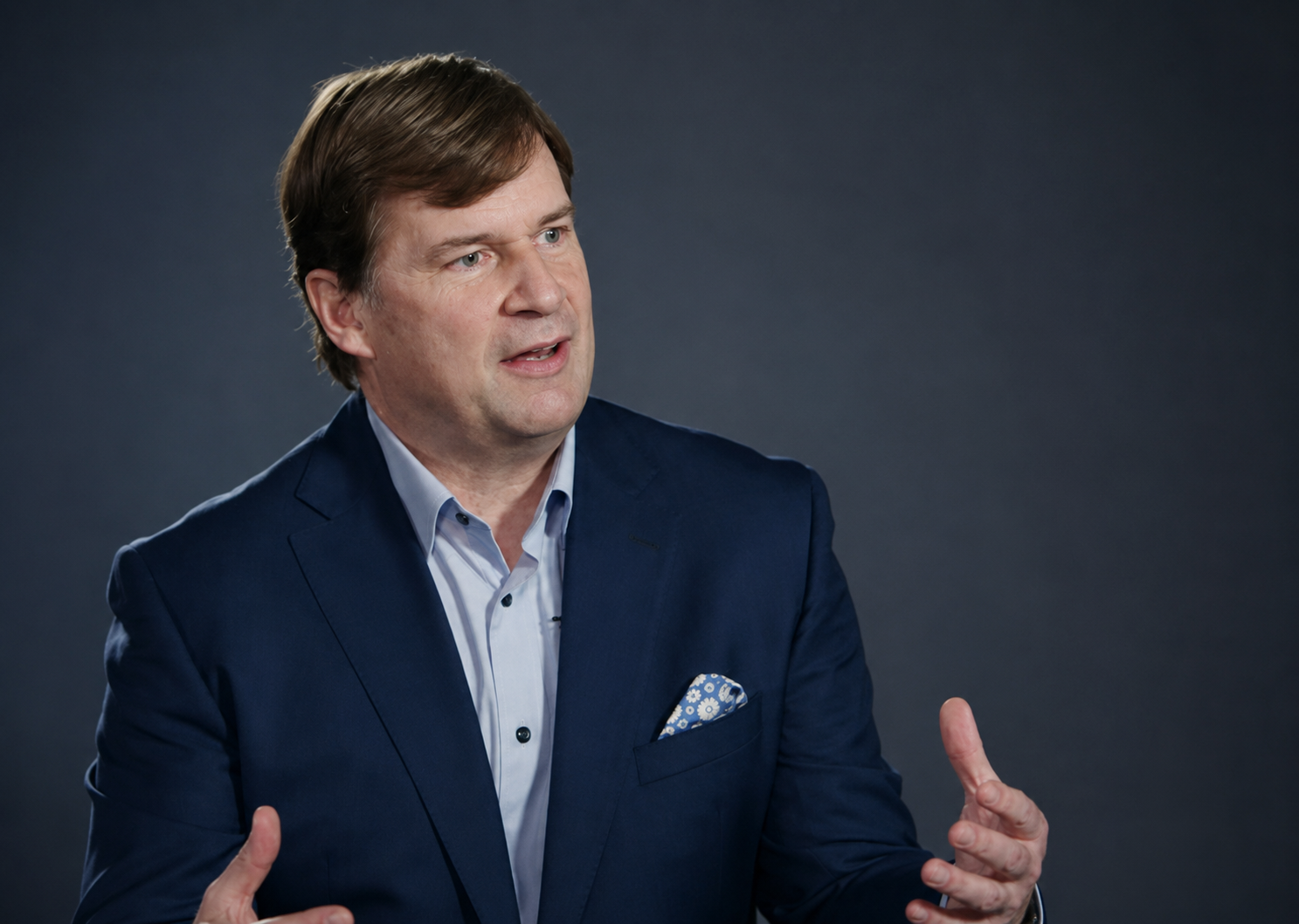
This is the problem Howard Dong is working on through Cephia, a deep-tech company building nature inspired vision sensors for the next generation of AI. As Founder and CEO of Cephia, Dong is helping turn advanced research in computational imaging, metasurface technology, and multimodal sensing into compact sensors that could give machines a richer way to understand the world.
Cephia’s idea is ambitious but easy to understand at a human level. Nature already built extraordinary visual systems long before modern cameras existed. Creatures such as mantis shrimp, dragonflies, and cephalopods can perceive light, motion, and environmental signals in ways humans cannot. Cephia is taking inspiration from those biological systems and combining it with engineered materials and AI to build sensors that go beyond traditional camera vision.
For Howard Dong, the opportunity is not just to build better hardware. It is to create a new sensing layer for physical AI, where robots, autonomous machines, industrial systems, and smart devices need more useful information from the world around them.
Who is Howard Dong
Howard Dong is the Founder and CEO of Cephia, a company focused on advanced AI sensing and computational imaging. His background connects research, computer vision, and real-world visual technology, which makes his work at Cephia especially relevant in a market where AI is moving from software into physical products.
Before leading Cephia, Dong built experience across several areas of computer vision. His professional background includes work connected to Disney Research Imagineering, ESPN Advanced Technology Group, and SRI, where advanced visual systems are not just theoretical ideas. They need to work in real situations, under changing conditions, and for demanding use cases.
That kind of background matters because Cephia is not building a simple camera accessory. The company is working on a deeper change in how machines capture information. Dong’s role sits between technical vision and company building. He has to understand the science, the product path, the market need, and the customer problem at the same time.
His success story is still developing, but it already has the markers of a strong deep-tech founder journey. Cephia has research roots, a specialized founding team, investor backing, and a clear market need in AI vision. Dong’s challenge is to bring all of that together into products that can move from lab prototypes to real-world adoption.
What Cephia is building
Cephia is building advanced vision sensors designed to help AI systems see more than ordinary cameras can. The company’s work brings together AI computational imaging, silicon metamaterials, metasurfaces, and multimodal sensing.
In simple terms, Cephia wants to give machines access to richer visual information. A normal camera may capture an image that looks clear to the human eye, but it does not always reveal what a machine actually needs to know. For example, an AI system may need to understand the material of an object, detect subtle surface differences, identify crop stress, inspect a manufactured part, or recognize visual signals that are invisible in a standard RGB image.
Cephia’s sensing approach is built around the idea that the sensor itself can become smarter. Instead of depending only on traditional lenses and standard image capture, Cephia uses engineered optical structures that can interact with light in more advanced ways. This can support forms of sensing such as RGB imaging, polarized sensing, and hyperspectral sensing.
That matters because different forms of light carry different kinds of information. A standard image may show what something looks like. A richer sensor can help reveal how that object behaves under light, what it may be made of, or whether there are hidden patterns that a conventional camera cannot easily detect.
This is where Cephia fits into the future of AI. As AI systems become more useful in robotics, manufacturing, agriculture, consumer electronics, and autonomous systems, they will need sensors that can capture more meaningful data from the physical world. Howard Dong is building Cephia around that shift.
Why nature inspired vision matters for AI
The phrase nature inspired vision sounds futuristic, but the logic behind it is grounded in something very old. Animals have evolved visual systems that solve problems humans are only beginning to engineer.
A mantis shrimp is often discussed for its remarkable ability to perceive complex light information. Dragonflies are known for fast visual processing and wide field awareness, which helps them react quickly in motion-heavy environments. Cephalopods such as octopuses and cuttlefish use highly adaptive visual systems to respond to their surroundings in sophisticated ways.
Cephia is not simply trying to copy these animals. The deeper idea is to learn from the way nature captures more than a flat picture of the world. Biological vision systems often combine sensitivity, speed, compactness, and environmental awareness. Those qualities are exactly what many AI systems need.
A robot in a warehouse does not only need to see boxes. It may need to understand surfaces, reflections, labels, damage, motion, and lighting changes. A smart agricultural tool may need to detect plant health before obvious visual symptoms appear. A manufacturing inspection system may need to spot defects that are difficult for a normal camera to reveal.
Nature inspired sensing gives Cephia a way to think beyond the limits of standard cameras. It opens the door to vision systems that are smaller, richer, and better matched to the needs of AI in real environments.
How metasurface technology helps machines see more
One of the most important ideas behind Cephia’s work is metasurface technology. A metasurface is an engineered surface designed to control light in ways that ordinary materials cannot. Instead of using only traditional optics, metasurfaces can help shape, filter, bend, or encode optical signals at a very small scale.
This matters because sensors are often constrained by size, cost, power, and complexity. If a company wants to put advanced sensing into robots, vehicles, consumer devices, or industrial systems, the technology must be compact and practical. A large, expensive, complicated imaging system may work in a research setting, but it is harder to deploy at scale.
Cephia’s use of silicon metamaterials points toward a more compact sensor architecture. By manipulating optical signals directly through engineered materials, the company aims to capture richer information without relying on bulky systems.
For AI, this can be powerful. The better the input data, the better the AI system can understand what it is seeing. A sensor that captures multiple types of visual signals can give AI models more context. That can improve perception in settings where ordinary cameras struggle, such as reflective surfaces, low contrast materials, changing outdoor light, or complex industrial scenes.
In that sense, Cephia’s work is not only about better images. It is about better machine perception.
Howard Dong’s journey from computer vision research to deep tech leadership
Howard Dong’s work with Cephia stands out because it sits at the meeting point of research and commercialization. Many advanced imaging ideas begin in university labs, but only a small number become companies with a path to real customers.
Cephia has strong links to the research world, including work associated with Princeton University’s Computational Imaging Lab. The company’s founding team includes people with deep experience in computational imaging, computer vision, and metasurface cameras. That research foundation gives Cephia credibility, but research alone is not enough.
The difficult part is turning a scientific breakthrough into a product that industries can actually use. That means thinking about sensor design, manufacturing, reliability, customer education, pricing, integration, and market timing. It also means explaining a complex technology in a way that customers can connect to their own problems.
This is where Howard Dong’s leadership becomes important. As CEO, he has to translate deep technical work into a clear company direction. Cephia’s technology may be highly advanced, but its value has to be easy to understand: better sensing can help AI make better decisions in the real world.
That is the kind of founder story that has substance. Dong is not just following a broad AI trend. He is building in one of the harder areas of AI hardware, where success depends on both scientific depth and practical execution.
How Cephia is turning Princeton research into real world sensing products
Cephia’s story is also about the path from university research to industry. A Princeton-linked spinout has the benefit of academic depth, but it also carries the responsibility of proving that the technology can move beyond papers and prototypes.
The company’s founding team includes Howard Dong, Ethan Tseng, and Felix Heide. Ethan Tseng, Cephia’s Founder and CTO, has research experience in metasurface cameras, including work connected to full-color metasurface camera development. Felix Heide, a Princeton professor, is known for work in computational imaging and computer vision and has experience connecting research to industry.
This mix gives Cephia a strong foundation. Dong brings leadership and applied computer vision experience. Tseng brings deep technical work in metasurface imaging. Heide brings academic strength and commercialization experience from the broader imaging and autonomous technology space.
The result is a company built around a serious technical thesis: AI vision needs better sensors, not just better algorithms.
For years, much of the AI conversation has focused on software models. Better models are important, but physical AI depends on the quality of the data coming from the real world. If the sensor misses key information, the AI system may never have enough context to make the right decision. Cephia is trying to solve that problem closer to the source.
Why multimodal sensing could change robotics and edge AI
Multimodal sensing means collecting different kinds of information at the same time. In vision, that can include standard color images, polarization data, spectral information, and other optical signals. Instead of giving AI one flat view of a scene, multimodal sensing gives it a richer set of clues.
This could be especially useful for robotics and edge AI.
Robots operate in messy environments. They may need to identify objects, avoid hazards, handle fragile materials, work near people, and adapt to changing lighting. A traditional camera can help, but richer sensing can make perception more reliable.
Edge AI has a different but related challenge. Devices at the edge often need to process information locally, without sending everything to the cloud. That means the sensor data needs to be meaningful, efficient, and useful in real time. Compact multimodal sensors could help edge devices capture better information from the beginning.
Cephia’s technology could also apply to manufacturing, where inspection systems need to detect small defects. It could help precision agriculture, where early signals of plant stress or quality changes may not be obvious in a normal image. It could support consumer electronics, where smaller and smarter sensors can improve device awareness. It may also become relevant in automotive systems, industrial automation, and autonomous machines.
The common thread is simple: when machines need to make decisions in the physical world, they need better ways to sense that world.
The funding milestone that strengthened Cephia’s next step
Cephia’s $4 million seed funding marked an important step in the company’s journey. In deep tech, funding is not just about money in the bank. It is often a signal that investors believe the technology has commercial potential, even if the path requires serious engineering and market development.
The seed round included investors such as Radiant Opto-Electronics Corporation, Incharge Capital, MetaVC Partners, NRM Partners, and SOSV. The funding is meant to support product development, team expansion, sales growth, and deeper customer engagement.
For Howard Dong, this milestone matters because it gives Cephia more room to move from research-backed technology toward market-ready products. Building hardware is expensive. Building new sensor platforms is even harder. The company needs capital to test, refine, manufacture, and prove its technology in real use cases.
The funding also adds credibility to Cephia’s broader mission. Investors are not only backing a sensor company. They are backing the idea that the next wave of AI will need new hardware to understand the physical world more clearly.
What makes Howard Dong’s work with Cephia different
There are many AI startups, but Cephia’s focus is different from the usual software-first story. Howard Dong is building in a field where progress depends on optics, materials, imaging science, hardware design, and AI all working together.
That makes the company harder to build, but also more distinctive.
Cephia is not simply trying to improve camera resolution. It is trying to change what a sensor can capture. That is a deeper shift. Higher resolution can show more pixels, but richer sensing can show more meaning. For AI, that difference matters.
A machine does not care about a beautiful image in the same way a person does. It needs useful signals. It needs to know what is happening, what something is made of, where the risk is, whether a process is working correctly, and how the environment is changing. Cephia’s work is aimed at giving machines that kind of richer perception.
Howard Dong’s success also comes from choosing a technical direction that connects to several growing markets at once. Robotics, autonomous systems, edge AI, manufacturing automation, and precision agriculture all need better perception. If Cephia can turn its technology into practical products, the company could sit at the center of a major shift in how AI systems sense reality.
Why Cephia could matter in the future of physical AI
The future of AI will not only be about chatbots, search tools, and software assistants. A large part of AI’s next stage will happen in the physical world. Robots will need to move through real spaces. Industrial systems will need to inspect and react. Agricultural tools will need to monitor crops. Vehicles and machines will need to understand fast-changing environments.
All of that depends on sensing.
Cephia’s work matters because it addresses a basic but often overlooked part of the AI stack. Before a model can reason about the world, it needs reliable information from the world. If the sensor is limited, the system is limited.
Howard Dong is building Cephia around the belief that better sensors can unlock better AI. By combining nature inspired design, metasurface technology, computational imaging, and multimodal sensing, the company is trying to create a new kind of vision system for machines.
That is what makes Dong’s story worth following. He is not just building another AI company. He is working on the layer that could help AI systems see more clearly, act more intelligently, and operate more safely in real environments.